WCVM’s gold medal recipient leads class of new veterinary graduates
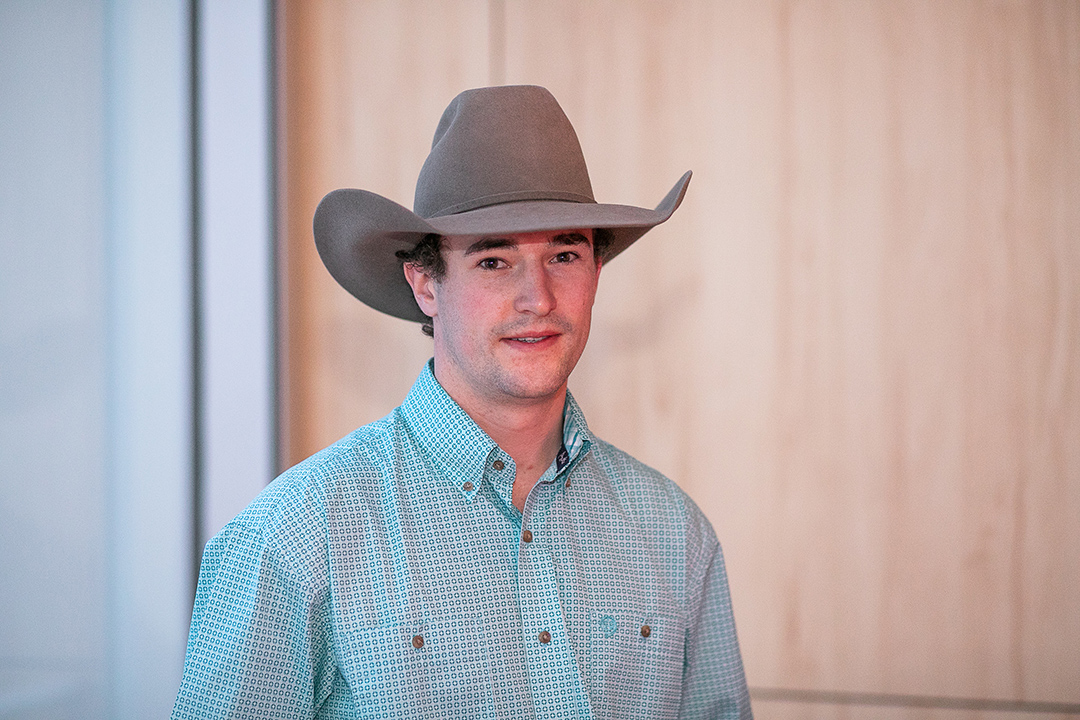
When Dr. Quinten (Quin) Bateman (DVM) stepped onto the stage to accept his Western College of Veterinary Medicine (WCVM) Faculty Gold Medal at the University of Saskatchewan’s Spring Convocation on June 3, he was met with thunderous applause from his classmates.
By Cat Zens“They gave him the loudest, longest ovation,” said WCVM Dean Dr. Gillian Muir (DVM, PhD) later that evening during the Class of 2026 graduation banquet.
The enthusiastic response was no surprise. Bateman, one of 87 students who graduated with a Doctor of Veterinary Medicine (DVM) degree this year, built a reputation as a supportive friend and dedicated team player throughout his four years at the WCVM.
“[This award] makes me proud of where I came from, proud of what I’ve been able to accomplish in school,” said Bateman. “I’m happy to represent all of my friends and family and the people who have supported me along the way.”
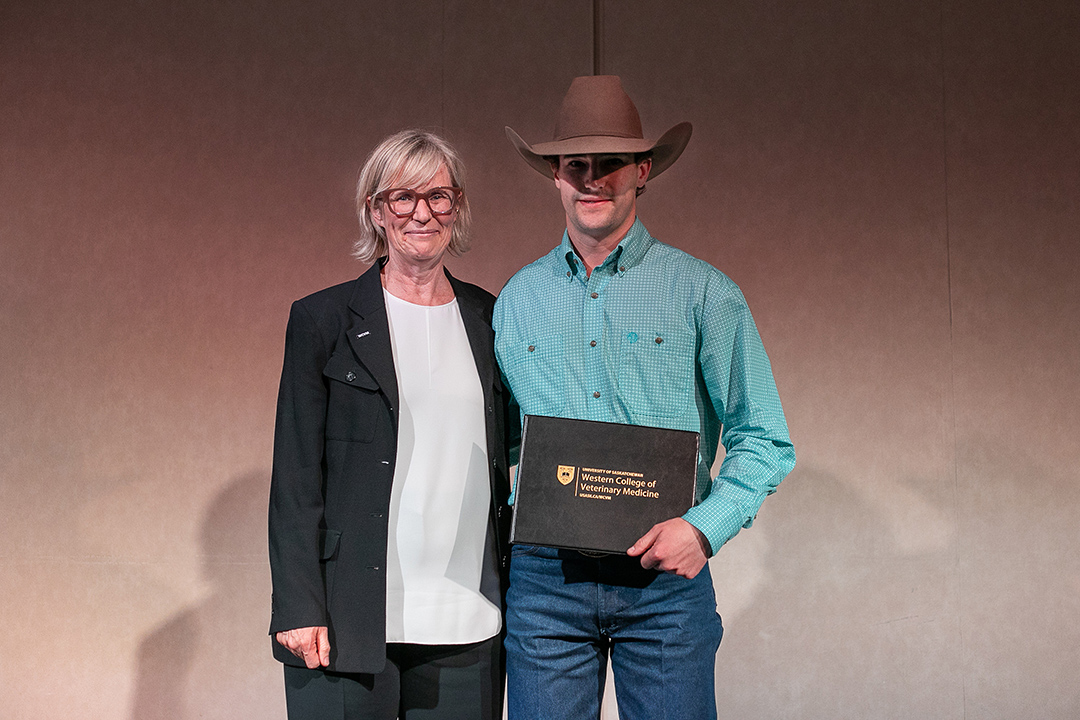
The WCVM Faculty Gold Medal is the highest honour for graduating veterinary students at the college. The faculty-nominated award is annually presented to the graduating veterinary student who achieves the highest overall general proficiency across all four years of the DVM program.
For Bateman, this honour reflects the lasting influence of the professors and mentors he has learned from along the way. He points to Drs. John Campbell (DVM), Fritz Schumann (BVSc) and Murray Jelinski (DVM) as his primary influences. Bateman notes that Jelinski’s veterinary business courses were especially valuable, offering practical insights to the business skills that veterinarians need to thrive in their own practices.
“The lessons he had to share were really valuable to me, and I think that will continue to be going forward,” he said.
Born in Pincher Creek, Alta., Bateman grew up on a nearby cattle ranch where he worked alongside his father and grandfather. While a career in veterinary medicine wasn’t always in his plans, the experience sparked an early interest in animal health and ranch operations.
In 2014, his family moved to Whitehorse, Yukon, where he spent his high school years immersed in outdoor life. He hunted and fished in remote areas and took part in an outdoor education program that included canoeing, biking and snowshoeing expeditions.
“I had a lot of different experiences [In Yukon] that I would have never had anywhere in southern Canada, and I suppose that was character building in a lot of ways,” he said. “I learned to handle adversity.”
Those experiences helped him develop teamwork and leadership skills that translate directly into veterinary medicine.
There was no single defining moment that convinced Bateman to pursue veterinary medicine. Rather, the decision developed gradually as he reflected on his background and interests.
“It evolved over time and sort of became something that I set my sights on,” said Bateman. Ranch life, combined with his northern experiences, ultimately pointed him toward a career in food animal medicine.
During his time at the WCVM, Bateman found the most value in the hands-on learning opportunities — particularly during his fourth-year clinical rotations and externships. His most memorable experiences included working with the clinical team at Veterinary Agri Health Services near Okotoks, Alta., along with working out of TELUS Cattle Professional Services in Lethbridge, Alta.
“I enjoyed getting to travel around different clinics and essentially practise veterinary medicine in a controlled, supervised environment,” he said. “It also felt close to home [when I was in] southern Alberta working with cattle producers.”
Bateman now practises with Head for the Hills Veterinary Health Services, a mixed-animal clinic that operates three locations in Carlyle, Kipling and Redvers, Sask. He first joined the busy rural practice as a summer student and returned after graduation. While he appreciates the variety of caring for both large animals and small animals, Bateman’s long-term goal is to open his own rural veterinary clinic and focus on food animal medicine.
“I want to become a leader in the beef industry and food animal production medicine,” he said. “I want to be up on current practices and ultimately make a positive impact on the beef industry itself, helping people advance their herd health. I’m an advocate for the industry — I grew up in it.”
As he begins his career, Bateman said one of his most important takeaways from the WCVM is the value of communication and ethics in veterinary practice.
“[There is great importance in] making sure everyone’s on the same page, being ethical, transparent and trying to do the right thing,” he said. “That’s something that’s very important to me.”