
WCVM donor sets up planned gift to support medical oncology residents
Richard Spracklin of Edmonton, Alta., has had a relationship with the Western College of Veterinary Medicine (WCVM) for more than 30 years.
By Jessica ColbyAs a young man, Spracklin considered a career as a veterinarian but ended up pursuing business instead — completing a Bachelor of Commerce degree at the University of Manitoba, followed by a Master of Business Administration degree at the University of Saskatchewan (USask) in 1992.
Regardless of his career choice, dogs have always been an integral part of Spracklin’s life for as long as he can remember — and a lifetime of owning dogs has had an emotional impact.
“It’s the value of ‘a greet at the door’ after a long business trip and a late-night return, the long walks, the warm cuddles on a movie night,” said Spracklin. “And equally the empty collar, the leash hanging in the closet not to be used again, the vacant dog bed and the absence of an enthusiastic greeting when you come home.”
Spracklin’s first experience with the WCVM’s veterinary teaching hospital came in 1994 when one of his English setters suffered a seizure on a Sunday afternoon. With no local veterinary clinics open on the weekend and no access to veterinary emergency services in his community, Spracklin drove his dog to the college’s hospital to be stabilized and treated.
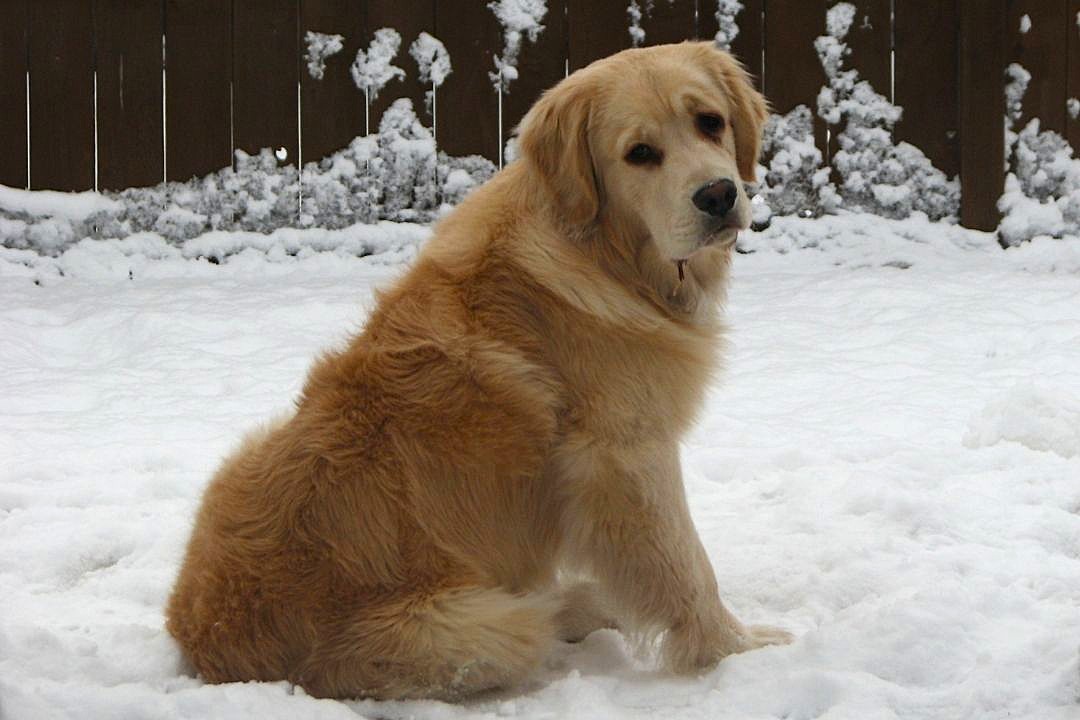
His second experience came nearly 30 years later in 2019 when he was seeking a second opinion about his beloved golden retriever’s cancer diagnosis. Higgins was diagnosed with pheochromocytoma, a typically cancerous tumour in the adrenal glands that had spread to other parts of his body.
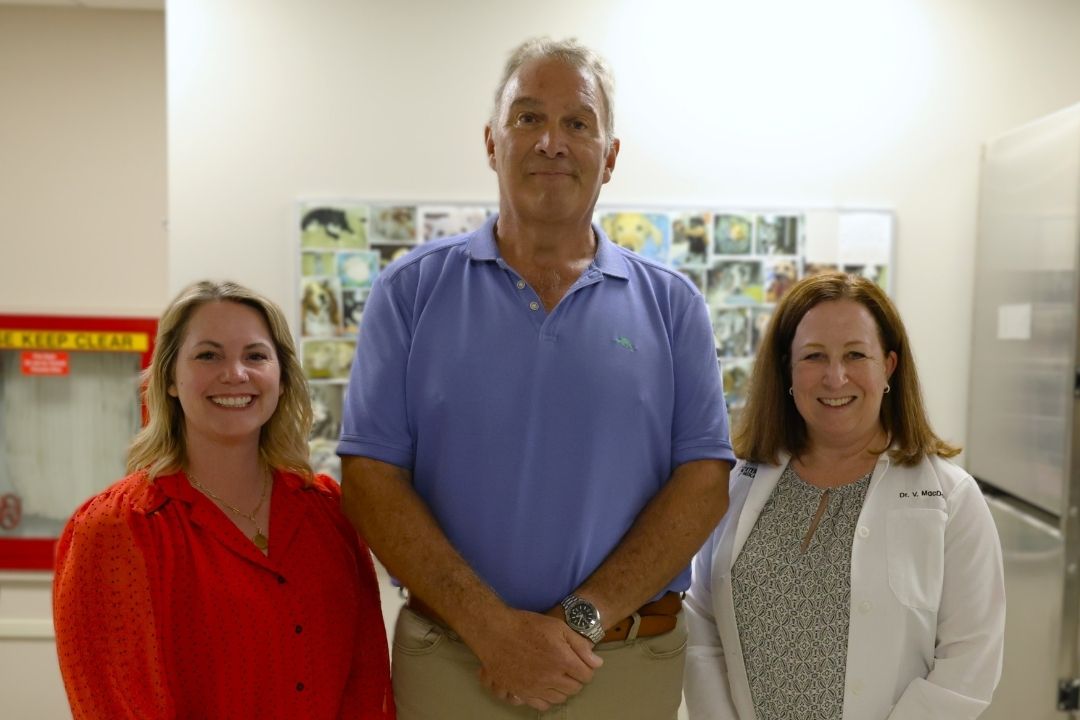
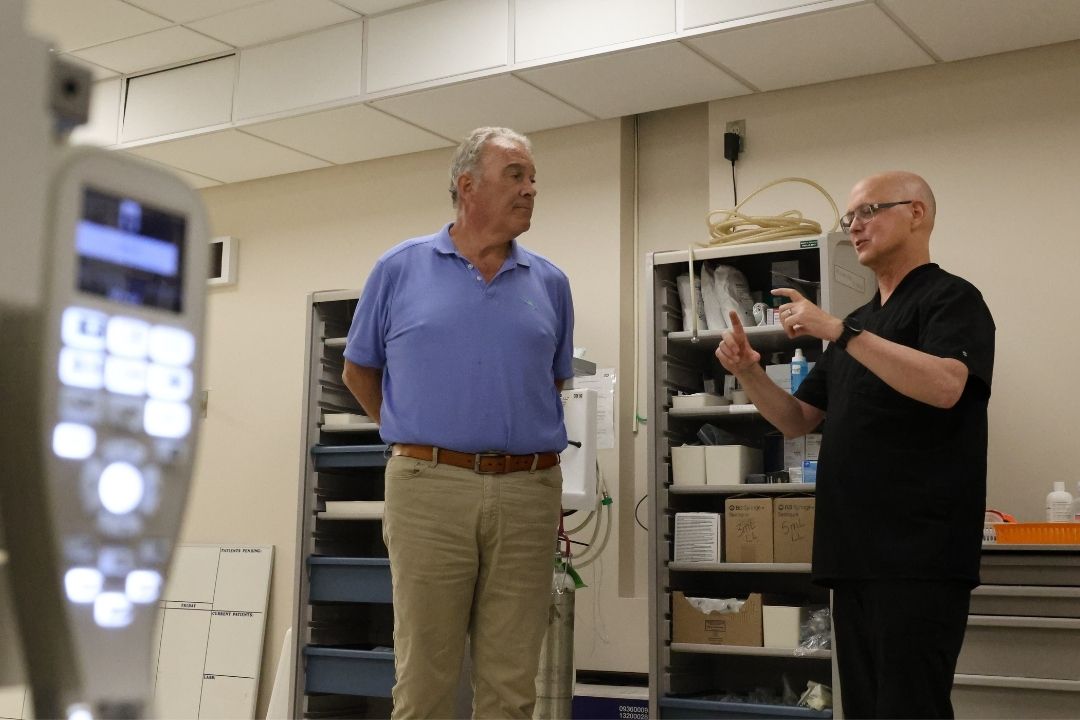
“The [cancer] symptoms didn’t show up until it was almost too late,” said Spracklin, who brought Higgins to the veterinary oncology service at the WCVM Veterinary Medical Centre (VMC). In the following year, Spracklin made several trips from Edmonton to Saskatoon for his dog’s treatments and checkups until Higgins’ passing in December 2020.
Dr. Charles Boisclair (DVM), who was completing a residency in veterinary oncology at the time, was part of Higgins’ clinical team at the VMC.
“Dr. Boisclair and the entire team exuded such positivity and compassion,” said Spracklin. “Every visit and phone call was compassionate yet practical and straightforward.”
As Higgins neared the end of his life, Spracklin asked Boisclair to let him know when the time to humanely euthanize his pet was drawing near. After that phone call came, Spracklin and Higgins stopped at the WCVM during a Saskatchewan road trip so Boisclair could give a final pat of goodbye to his longtime patient.
“I thought, ‘My God, if there was ever a person who found his calling, it’s Charles,’” said Spracklin.
Boisclair, who completed his residency and Master of Science degree at the WCVM in 2021, is now a board-certified veterinary medical oncologist practising at Ottawa Animal Emergency and Specialty Hospital in Ontario.
In addition to his owners, Boisclair and other veterinary team members, Higgins was loved by many people — everyone from groomers to patrons at the neighbourhood Starbucks. Spracklin notes that Higgins (like most golden retrievers) was a very happy dog. His favourite holiday was Christmas, and he even knew there would be presents waiting for him under the tree.
“When we put him down, the outpouring of grief and support for our boy was amazing,” says Spracklin. “For some time after he passed, total strangers would stop me and ask where he was or tell me that they remembered him.”
As a result of his experiences with the WCVM, Spracklin decided to leave a planned gift to the veterinary college in his will.
“My wife and I looked at various charities and felt the WCVM was near and dear to our hearts because of the work they had done with our Higgins and previously with Emily, our English setter,” said Spracklin. “We felt dogs need help, too.”
Spracklin’s planned gift will be used to create the “Dr. Charles Boisclair Scholarship in Oncology in Memory of Higgins.” USask graduate students who are enrolled in the WCVM’s combined Master of Science-medical oncology residency program will be eligible to apply for the annual award.
Spracklin hopes the future scholarship, which is named after his beloved Higgins and the resident who cared for his special dog, will inspire more veterinarians to pursue a specialty in veterinary oncology.
“Education was our path forward and [we] felt helping people achieve their dreams was worthy,” Spracklin said. “Given our experience, we hope supporting oncology can lead to new and effective treatments.”
Melissa Mann, director of development at the WCVM, emphasizes how Spracklin and other donors who decide to make a bequest in their wills can have a significant impact on the college.
“It allows us to further our priorities and folks can do that in a variety of ways: by creating a student award, supporting our Northern Engagement and Community Outreach program, supporting our simulation centre and student learning, or giving to the veterinary teaching hospital,” she said.
Individuals can completely customize where and how they would like the WCVM to use their planned gift. Mann adds that the college’s development team can help donors craft a detailed statement that they can share and discuss with their lawyer.
“By approaching us early on in the process, it allows us to make sure that everything is set up in a way that your gift is directed to an area that’s really meaningful to you,” said Mann.
Mann adds that leaving a planned gift is a great way to honour the memory of a loved one: “Whether it’s a special pet or a person who has had an incredible impact on your life, naming your gift after someone you love is a beautiful way for their memory to live on.”
Spracklin echoes the importance of developing a planned gift and donating to charitable organizations like the WCVM. “Many charities could benefit immeasurably from what is proportionately little to you but life changing to others.”
If you have questions about creating a planned gift to the WCVM, contact the college’s development team (wcvm.supportus@usask.ca).
Together we will support and inspire students to succeed. We invite you to join by supporting current and future students' needs at USask.